5 Steps to Understand and Create Flash USDT Using ChainIDE
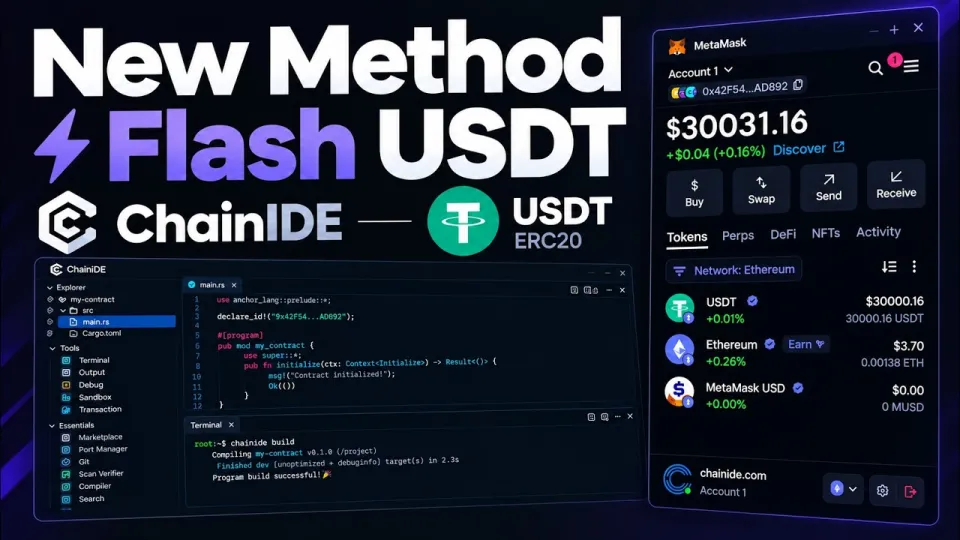
Video: Flash USDT | Found a NEW Method on ChainIDE
· based on the channel Rca FastPrint
Key takeaways
- Flash USDT is an ERC20 token created via smart contracts on the Ethereum network.
- ChainIDE is used as the development environment to build and test Flash USDT tokens.
- MetaMask wallet connects to the Ethereum network to interact with Flash USDT contracts.
- The process involves deploying smart contracts, verifying code, and testing token functionality.
- Always verify contract addresses and code before interacting with any Flash USDT setup.
Flash USDT represents a new method to create USDT-like tokens quickly using smart contracts on Ethereum-compatible networks. This approach leverages the ChainIDE development environment and MetaMask wallet to deploy, test, and interact with ERC20 token contracts mimicking USDT behavior. The method is primarily educational and experimental, emphasizing safe development practices and proper contract verification.
What is Flash USDT and How It Works
Flash USDT is essentially an ERC20 token created through a smart contract that replicates the functionality of USDT tokens. It is not an official USDT but a token designed for testing or educational purposes. The method involves writing Solidity smart contracts that define token parameters such as name, symbol, total supply, and balance management. By deploying these contracts on the Ethereum network or testnets, users can simulate USDT transactions and interactions.
Setting Up ChainIDE for Flash USDT Development
ChainIDE (https://chainide.com/) is an online integrated development environment tailored for blockchain smart contract coding, testing, and deployment. To create Flash USDT:
- Register or log in on ChainIDE.
- Create a new Solidity project.
- Use provided scripts or templates from resources like https://sites.google.com/view/defiflashusdt that contain Flash USDT contract code.
- Compile the smart contract ensuring no errors.
- Deploy the contract to a preferred Ethereum network—mainnet or testnet.
ChainIDE offers a user-friendly interface to manage this workflow, including debugging and contract verification.
Integrating MetaMask for Wallet Interaction
MetaMask is a browser-based crypto wallet that allows users to interact with Ethereum blockchain and smart contracts securely. After deploying the Flash USDT contract:
- Connect MetaMask to the same Ethereum network used in ChainIDE.
- Import the deployed contract address into MetaMask or use contract interaction tools.
- Use MetaMask to sign transactions such as token transfers or approval operations.
- Monitor balances and contract states directly from the wallet interface.
This integration enables real-time interaction with your Flash USDT tokens without exposing private keys.
Understanding ERC20 Token Structure in Flash USDT
The Flash USDT token follows the ERC20 standard, which includes:
- Total supply: defines the maximum number of tokens.
- Balance mapping: tracks each address's token holdings.
- Transfer function: moves tokens between addresses.
- Approve and allowance functions: manage delegated spending.
The contract code typically implements these functions in Solidity. Understanding the code ensures safe creation and interaction with the token.
Testing, Verifying, and Avoiding Common Mistakes
Before using Flash USDT tokens in any serious capacity, thorough testing is necessary:
- Use Ethereum testnets like Ropsten or Goerli to deploy contracts without risking real funds.
- Verify contract source code matches the deployed bytecode to ensure transparency.
- Check all wallet addresses and network settings before signing transactions.
- Avoid sending real funds to unverified or unknown contracts.
- Review transaction details carefully in MetaMask.
These precautions help prevent loss of assets and ensure trustworthiness of the Flash USDT setup.
Useful Links
- ChainIDE official site for development and deployment: https://chainide.com/
- Flash USDT creation scripts and resources: https://sites.google.com/view/defiflashusdt
Summary
Creating Flash USDT tokens involves five key steps: understanding the token concept, setting up ChainIDE, integrating MetaMask, grasping ERC20 contract structure, and rigorous testing with verification. This method provides a practical way to experiment with USDT-like tokens for educational or development purposes. Always exercise caution by verifying contracts and avoiding real fund transfers to unknown addresses. For a detailed walkthrough and practical demonstration, the Rca FastPrint channel offers an in-depth analysis of the Flash USDT method, guiding users through the entire process. Explore ChainIDE and start your Flash USDT development journey today.
Questions & answers
What is Flash USDT and is it the official USDT token?
Flash USDT is a user-created ERC20 token that mimics USDT functionality but is not the official Tether (USDT). It is mainly used for educational and testing purposes on Ethereum networks.
How does ChainIDE help in creating Flash USDT?
ChainIDE provides an integrated development environment where users can write, compile, deploy, and test smart contracts for Flash USDT tokens, streamlining the development process.
Can I use real funds with Flash USDT contracts?
It is strongly advised not to send real funds to Flash USDT contracts unless you have independently audited and verified the contract code and addresses to avoid potential loss.
How do I connect MetaMask to interact with Flash USDT tokens?
After deploying the Flash USDT smart contract on an Ethereum network, connect your MetaMask wallet to the same network and use the contract address to interact with the token through wallet transaction functions.
Source: Flash USDT | Found a NEW Method on ChainIDE · Markdown version